Freezing
Confirm the lowest shelf temperature required and whether the formulation has a known critical temperature.
Buyer input: formulation and freezing methodPeptide lyophilization equipment
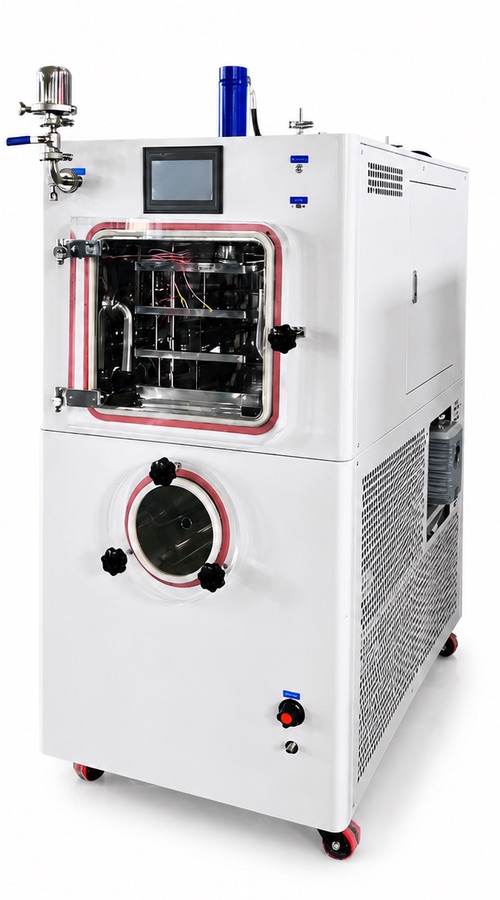
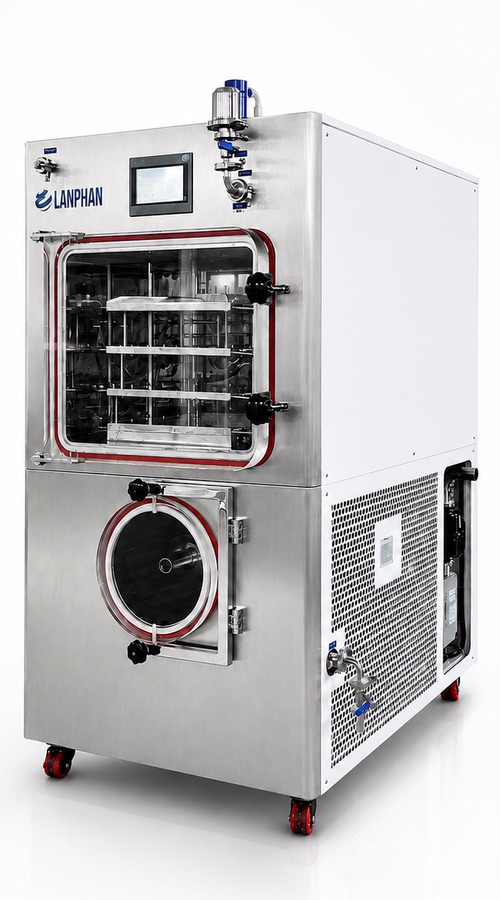
Compare the LP-LGJ-30 and LP-LGJ-50 by vial format, fill volume, shelf area and total liquid load. The starting point depends on the formulation, vial loading and total liquid volume; the peptide name by itself is not enough.
Before model selection
Two peptide projects can use the same vial but place very different demands on the shelves and condenser. These six details are enough for a practical first comparison.
Outside diameter, height, stopper type and whether stoppering is required.
State the liquid fill, not only the final dry peptide weight.
Include the normal batch and the largest batch you expect during pilot work.
Share the buffer or solvent system and any known temperature limits.
Provide shelf temperature, chamber pressure and cycle time if a method already exists.
Confirm power supply, room access, ventilation and available installation space.
Process window
Shelf control, chamber pressure, product temperature and condenser load all matter during cycle development. A capacity figure cannot answer those questions on its own.
Confirm the lowest shelf temperature required and whether the formulation has a known critical temperature.
Buyer input: formulation and freezing methodReview the intended pressure range, heat input and product-temperature monitoring method.
Buyer input: existing cycle or development targetState the final moisture target or release criterion if one has already been established.
Buyer input: endpoint and handling requirementPilot model comparison
The larger unit adds shelf area, tray size and nominal ice capacity. For vial work, calculate the required shelf footprint and total liquid fill before using the batch-weight figure.
Smaller pilot load
Where it fits: the pilot vial count and total liquid load fit the smaller shelf footprint.
Larger pilot load
Where it fits: the vial count, fill volume or pilot campaign needs the wider shelf area.
The figures above are taken from the current LP-LGJ-30 and LP-LGJ-50 product listings. Confirm the final electrical configuration, utilities, accessories and acceptance criteria in the written quotation.
Vial stoppering review
A model name cannot confirm that every vial and stopper combination will work. Send the container drawing or physical dimensions before the chamber configuration is finalized.
Vial dimensionsOutside diameter, total height and usable shelf footprint.
Stopper positionPartially inserted height before drying and final seated height.
Batch layoutVials per shelf, edge clearance and whether partial loads are common.
Closing conditionsState whether vacuum or inert-gas backfill is part of the required process.
Project boundary
The standard listing confirms pilot equipment specifications and automatic stoppering. It does not, by itself, establish suitability for sterile injectable production or a specific regulatory program.
Confirm before quotation if required:
Peptide freeze dryer questions
The basic freeze-drying process is the same. Peptide projects often place more attention on formulation temperature limits, vial loading, pressure control, product-temperature monitoring and closing the vials after drying. The required configuration depends on the actual process.
Not by kilograms alone. For vial-based peptide work, compare the vial diameter, fill volume, vial count, shelf footprint and total water load. The listed batch figure is a first reference, not a substitute for a loading calculation.
No. Automatic stoppering is one equipment function. Sterile production can also require a defined cleanroom interface, sterilization and cleaning provisions, qualification documents, environmental controls and a validated process. Confirm those requirements separately.
Send the vial and stopper dimensions, fill volume, vials per batch, formulation or solvent information, known temperature limits, current cycle data, required closing conditions, destination country and available power supply.
Application review
Include vial size, fill volume, vial count, formulation notes and required stoppering conditions. We will use those details to check the LP-LGJ-30 or LP-LGJ-50 starting point.
Useful attachmentsVial drawing, loading sketch, existing cycle and room utility information.
Send Peptide Project DetailsRequest a factory review
Include a product photo if possible, one normal batch weight, destination country and available voltage. Sales will reply with the relevant HFD models and any details still needed.